Blog

Aluminium Chequered Plates

Aluminium Chequered Plates Manufacturer – Top Quality

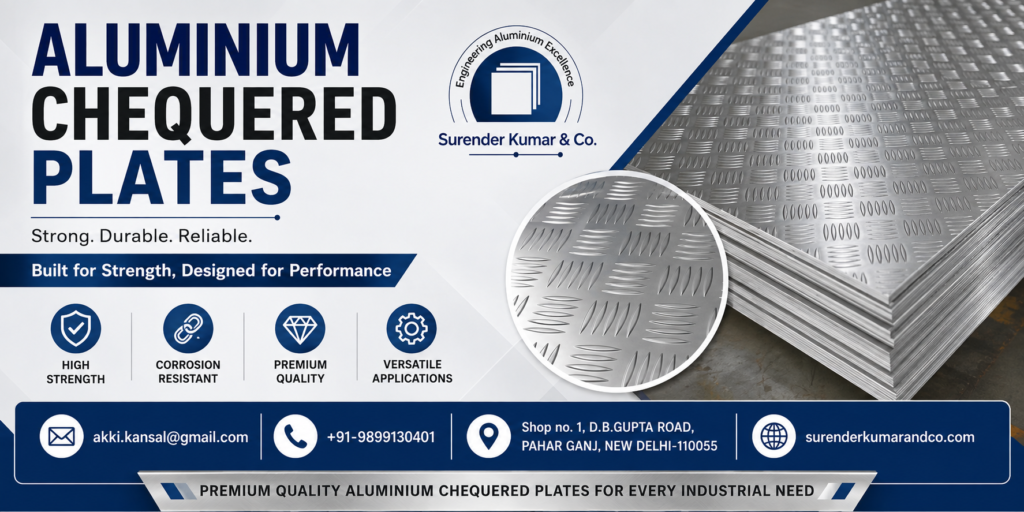
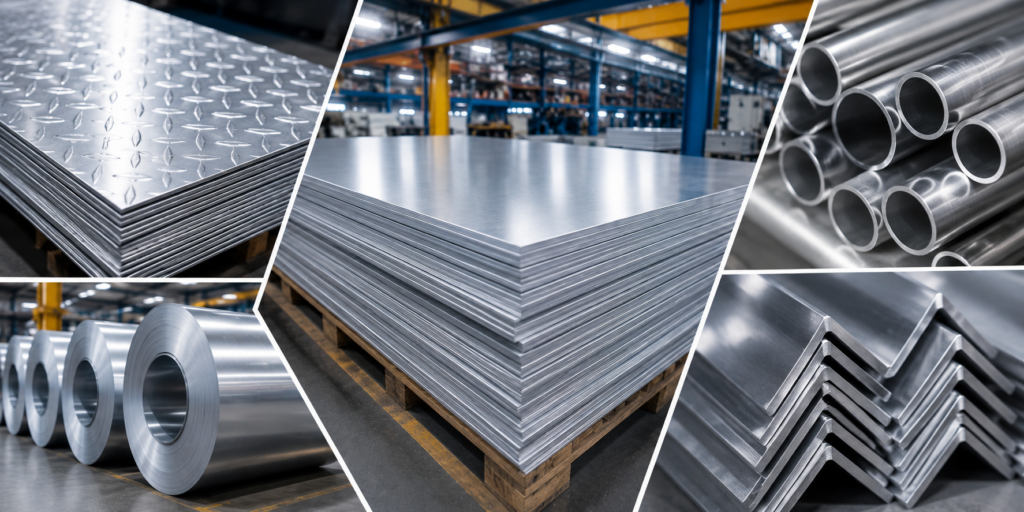
Aluminium Chequered Plates Manufacturer – Top Quality An aluminium chequered plate (also called a checker plate, tread plate, or diamond plate) is a flat aluminium sheet with a raised pattern rolled onto one side, usually diamonds or lines, to improve grip and reduce slipping. Manufacturers produce these plates in various alloys, thicknesses, and pattern styles for flooring, ramps, vehicle bodies, staircases, and industrial platforms. When sourcing from an aluminium chequered plates manufacturer, buyers should evaluate the alloy grade, base thickness, pattern depth, sheet size, and surface finish against their specific load and environment requirements. Surender Kumar & Co. is among the suppliers offering Aluminium Chequered Plates for such industrial and architectural applications. Aluminium chequered plates are one of the most practical products in the metals industry. They combine the light weight and corrosion resistance of aluminium with a raised surface pattern that makes them useful anywhere slip resistance matters — from factory floors to truck beds. For engineers, contractors, and procurement teams, choosing the right plate isn’t just about picking “aluminium” off a catalogue; it involves understanding alloy composition, gauge thickness, pattern type, and how the plate will actually perform under load and foot traffic. This guide walks through what aluminium chequered plates are, how they’re made, where they’re used, and what to check before placing a purchase order — whether you’re a fabricator building a custom enclosure or a contractor speccing flooring for a new facility. What Is an Aluminium Chequered Plate? An aluminium chequered plate starts as a flat aluminium sheet or coil that is passed through rollers embossed with a raised pattern — typically a diamond, lens, or five-bar (rib) design. The pattern is rolled into the metal during production, not stamped or added afterward, which keeps the surface durable under repeated foot and wheel traffic. The underside of the plate remains flat, so it sits evenly on a frame, floor joist, or vehicle chassis, while the top face provides the textured, anti-slip surface. Common Alloys Used Chequered plates are generally produced from aluminium alloys in the 1000, 3000, and 5000 series, each suited to different needs: Alloy Series General Characteristics Typical Use Case 1000 series High purity aluminium, good corrosion resistance, softer Decorative panels, light-duty flooring 3000 series Manganese alloy, moderate strength, workable General fabrication, cladding 5000 series Magnesium alloy, higher strength, good weldability Structural flooring, transport, marine applications The exact alloy grade a manufacturer offers depends on their rolling capability and the raw material sourced, so it’s worth confirming the alloy designation directly with the supplier for your specific application. Thickness and Pattern Considerations Two factors most affect how a chequered plate performs: base metal thickness and pattern depth. Base thickness determines load-bearing capacity and rigidity. Thinner plates work well for wall cladding or decorative panels, while thicker plates are chosen for flooring, ramps, and platforms that carry foot or vehicle traffic. Pattern depth and style affect grip. A deeper, more pronounced diamond pattern generally offers better slip resistance in wet or oily environments, while a finer pattern may be preferred where appearance matters as much as function. Buyers should specify both dimensions clearly when requesting quotes, since “aluminium chequered plate” alone doesn’t define performance — the gauge and pattern do. Where Aluminium Chequered Plates Are Used Because aluminium chequered plates combine light weight with corrosion resistance and a non-slip surface, they show up across several industries: Transport and automotive — truck bed liners, trailer flooring, bus and railway car flooring, and toolbox exteriors, where weight savings directly affect fuel efficiency and payload. Industrial and architectural flooring — walkways, stair treads, catwalks, ramps, and mezzanine flooring in factories, warehouses, and commercial buildings. Marine applications — deck plating and boarding ramps, where aluminium’s natural resistance to saltwater corrosion is an advantage over uncoated steel. General fabrication — enclosures, toolboxes, workbenches, and equipment guards where a textured, wear-resistant surface is useful. Why Aluminium Over Steel Chequered Plate? Both aluminium and steel chequered plates serve similar purposes, but the choice often comes down to weight, corrosion exposure, and cost. Aluminium is significantly lighter than steel of equivalent thickness, which matters in transport applications where reducing dead weight improves efficiency. It also naturally resists corrosion without additional coating, which is useful in humid, coastal, or chemically exposed environments. Steel, by contrast, generally offers higher raw strength per unit thickness and may be preferred for very heavy structural loads, provided it’s properly coated or galvanized. For many flooring, cladding, and transport applications, aluminium’s strength-to-weight ratio and low maintenance needs make it the more practical choice — but the right material always depends on the specific load, budget, and environmental conditions of the project. Selecting the Right Manufacturer: What to Check When evaluating an aluminium chequered plates manufacturer, procurement teams and engineers typically look at a few practical factors: Alloy and thickness range — Confirm the manufacturer can supply the specific alloy grade and gauge your project requires, rather than assuming a generic match. Sheet size and customization — Standard sheet sizes vary by manufacturer; check whether custom cutting or sizing is available for your application. Surface finish and pattern consistency — Ask for sample images or physical samples to assess pattern depth and finish quality before committing to a bulk order. Documentation — Request material test certificates or specification sheets relevant to your order, especially for structural or regulated applications, and verify these directly with the supplier rather than assuming standard certifications apply. Lead time and order quantities — Confirm minimum order quantities and realistic lead times for your project timeline, since these vary by manufacturer and current production load. Surender Kumar & Co. supplies aluminium chequered plates alongside other aluminium sheet and plate products, and can be contacted directly to discuss alloy availability, thickness options, and order specifications for a given project. Maintenance and Handling Tips Aluminium chequered plates are relatively low-maintenance, but a few practices extend their service life: Store sheets flat and off the ground to avoid warping or moisture pooling between stacked plates. Clean the

Aluminium Chequered Plates Manufacturer – Top Quality Read More »

Aluminium Sheet Supplier

Choose the Right Aluminium Sheet Supplier for Your Business

Picture this: you’ve got a big order to fulfil, your production line is waiting, and the aluminium sheets you were promised “by Monday” still haven’t shown up. The supplier isn’t picking up calls. Your client is asking for updates you don’t have. Sound familiar? If you’ve been in manufacturing, fabrication, construction, or any business that depends on metal sheets, you’ve probably faced some version of this nightmare. The truth is, choosing the right Aluminium Sheet Supplier isn’t just a procurement decision — it’s a business decision that affects your delivery timelines, product quality, and ultimately, your reputation with your own customers. At Surender Kumar & Co., we’ve spent years supplying aluminium sheets to businesses of all sizes, and we’ve seen firsthand what separates a reliable supplier from one that causes headaches. In this guide, we’ll walk you through everything you need to know to make a smart, confident choice. What Does an Aluminium Sheet Supplier Actually Do? On the surface, it sounds simple — a supplier sells you aluminium sheets. But a good supplier does much more than that. They’re your partner in quality control, timely delivery, technical guidance, and even cost planning. A good supplier helps you choose the right grade and thickness for your specific application, whether that’s roofing, signage, automotive parts, kitchen equipment, or electrical enclosures. A bad supplier just sells you whatever’s in stock and hopes it works. Why This Decision Matters More Than You Think Aluminium sheets aren’t a one-size-fits-all product. Different grades (like 1100, 3003, 5052, or 6061) behave differently under stress, heat, and corrosion. If your supplier doesn’t understand your application, you could end up with material that warps, cracks, or simply doesn’t perform — costing you rework, wasted time, and unhappy clients. Key Factors to Look for in an Aluminium Sheet Supplier Here are the things that genuinely separate the good suppliers from the rest: Comparison: Reliable Supplier vs Unreliable Supplier Aspect Reliable Supplier Unreliable Supplier Quality Consistency Same specs across every batch Quality varies batch to batch Delivery Timelines Sticks to committed dates Frequent delays, poor communication Documentation Provides test certificates readily Vague or missing paperwork Pricing Transparent, quoted upfront Hidden costs appear later Communication Responsive, proactive updates Hard to reach, slow replies Note: This table highlights common patterns businesses report when comparing dependable suppliers against inconsistent ones. Understanding Aluminium Sheet Grades: A Quick Reference Before you even start talking to suppliers, it helps to know roughly what grade suits your project. Here’s a simple cheat sheet. Aluminium Grade Quick Reference Table Grade Common Use Key Property 1100 Utensils, reflectors, chemical equipment High corrosion resistance, soft 3003 Roofing, cladding, general fabrication Good workability, moderate strength 5052 Marine parts, fuel tanks, appliances High corrosion resistance, good strength 6061 Structural parts, machinery, frames High strength, heat-treatable Note: This is a general guide. Always confirm the exact grade suitability with your supplier based on your project’s technical requirements. Step-by-Step Guide: How to Choose Your Aluminium Sheet Supplier Now let’s get practical. Here’s a simple process you can follow when evaluating suppliers. The Supplier Selection Process Step What To Do Step 1 Define your requirement — grade, thickness, quantity, and finish needed Step 2 Shortlist 3–4 suppliers with a good market reputation Step 3 Ask for sample sheets and test certificates Step 4 Compare pricing along with delivery terms, not price alone Step 5 Place a trial order before committing to a large, long-term contract Step 6 Evaluate the experience — communication, delivery, and packaging quality Note: A trial order is one of the smartest ways to test a new supplier before scaling up your business relationship. Tips and Best Practices Common Mistakes Businesses Make Do’s and Don’ts When Choosing a Supplier Do’s Don’ts Verify supplier credentials and past client feedback Don’t rely only on verbal promises Request samples before bulk ordering Don’t skip quality checks to save time Clarify delivery timelines in writing Don’t assume “urgent” means the same to everyone Compare multiple quotes before deciding Don’t choose based on price alone Note: Simple checks like these can save your business from costly delays and disputes down the line. Frequently Asked Questions 1. What should I check first before choosing an aluminium sheet supplier?Start with quality documentation and product consistency. A supplier who can show mill test certificates and consistent batch quality is usually more dependable. 2. How do I know if the aluminium sheet grade is right for my project?It depends on your application — structural, decorative, or corrosion-prone environments each need different grades. A good supplier will guide you based on your exact use case. 3. Is it okay to switch suppliers frequently for better pricing?It’s better to build a steady relationship with one or two reliable suppliers rather than switching often, since consistency in quality and service usually matters more than small price differences. 4. What documents should a supplier provide with the order?At minimum, a mill test certificate, invoice with correct specifications, and packaging details. For larger industrial orders, additional quality reports may be needed. 5. How can I test a new supplier without a big financial risk?Place a small trial order first. This lets you evaluate their sheet quality, delivery reliability, and communication before committing to a long-term partnership. 6. Does a local supplier offer any advantage over a distant one?Yes, a local supplier often means faster delivery, easier communication, and lower transport costs, though it’s still important to check if their quality standards match your needs. Conclusion Choosing the right aluminium sheet supplier isn’t about finding the cheapest quote — it’s about finding a partner who understands your business, delivers consistent quality, and shows up when they say they will. A little diligence upfront, from checking certificates to placing a trial order, can save you from major headaches later. At Surender Kumar & Co., we’ve built our reputation on exactly these principles — consistent quality, honest pricing, and reliable delivery. If you’re evaluating suppliers for your next project, we’d be happy to have a conversation and show

Choose the Right Aluminium Sheet Supplier for Your Business Read More »

Aluminium Coil Supplier

Aluminium Coil Supplier for Industrial Applications: A Complete Guide

Picture this: you’re running a production line that depends on a steady supply of aluminium coils. One late shipment, one batch with inconsistent thickness, or one supplier who disappears after the invoice is paid — and suddenly your entire schedule is in chaos. If you’ve ever dealt with a sheet metal fabricator, HVAC manufacturer, or construction contractor, you know this scenario isn’t hypothetical. It happens more often than most businesses would like to admit. That’s exactly why choosing the right Aluminium Coil Supplier isn’t just a purchasing decision — it’s a business decision that affects your quality, your timelines, and ultimately, your reputation with your own customers. At Surender Kumar & Co., we’ve spent years supplying aluminium coils to industries that simply can’t afford to compromise, and in this guide, we’ll walk you through everything you need to know before you place your next order. What Exactly Is an Aluminium Coil, and Why Does It Matter? In simple terms, an aluminium coil is a long, continuous sheet of aluminium that has been rolled into a coil for easy storage, transport, and further processing. Think of it like a giant roll of metal “fabric” that manufacturers unroll, cut, bend, or stamp into the shapes they need — whether that’s roofing sheets, HVAC ducts, electrical enclosures, or automotive parts. What makes aluminium so popular across industries is its unique combination of properties: it’s lightweight, naturally resistant to corrosion, an excellent conductor of heat and electricity, and remarkably easy to work with. Unlike steel, it doesn’t rust, which makes it ideal for outdoor and humid environments. And because it’s so light, it reduces transportation and handling costs significantly compared to heavier metals. Common Industrial Applications of Aluminium Coils Aluminium coils aren’t a one-size-fits-all product. Different industries use different grades, thicknesses, and finishes depending on their specific needs. Here’s a quick look at where these coils typically end up: Industry Application Overview Industry Common Use of Aluminium Coil Preferred Thickness Range Construction & Roofing Roofing sheets, wall cladding, gutters 0.4mm – 1.2mm HVAC & Refrigeration Ducting, fins, heat exchangers 0.2mm – 0.8mm Automotive Body panels, radiators, trims 0.5mm – 2mm Packaging Foil stock, container lids, caps 0.1mm – 0.3mm Electrical Bus bars, transformer windings 0.3mm – 1.5mm Note: Actual thickness requirements vary by project specification and grade selected. Always confirm with your supplier’s technical team. Why the Right Supplier Makes All the Difference Here’s something many first-time buyers don’t realize: aluminium coil is not a commodity where “any supplier will do.” Two coils that look identical on paper can behave very differently on the shop floor. One might crack during bending, oxidize prematurely, or vary in thickness across the roll — all because of inconsistent manufacturing or poor quality control somewhere in the supply chain. A trusted supplier does more than just deliver metal. They act as a quality checkpoint, a technical advisor, and a reliability partner. This is where working with an established name like Surender Kumar & Co. genuinely pays off — because we understand that our customers’ production lines depend on consistency, not surprises. Key Benefits of Choosing a Reliable Aluminium Coil Supplier Aluminium Coil Grades: A Quick Comparison Grade Key Property Best Suited For 1100 High corrosion resistance, softness Chemical equipment, reflectors 3003 Good strength with formability HVAC, general fabrication 5052 High strength, marine-grade corrosion resistance Marine, automotive, appliances 8011 Excellent formability, food-safe Packaging, foil, container lids Note: Grade selection should always be finalized with your supplier based on load, environment, and finishing requirements. How to Choose the Right Aluminium Coil Supplier: Step-by-Step If you’re new to sourcing aluminium coils, the process can feel overwhelming. Here’s a simple, practical roadmap to follow. The Supplier Selection Process Step What to Do Why It Matters 1. Define your needs List thickness, alloy grade, quantity, and finish required Prevents mismatched orders and rework 2. Check credentials Verify certifications, years in business, and client references Builds confidence in quality and reliability 3. Request a sample Test the coil on a small run before committing to bulk Confirms consistency before large investment 4. Compare pricing structure Ask for a transparent breakdown, not just a flat quote Avoids hidden costs later in the order cycle 5. Confirm logistics Discuss delivery timelines, packaging, and transport handling Protects your production schedule 6. Establish a long-term relationship Choose a supplier who can scale with recurring orders Saves time and builds smoother future transactions Note: Skipping the sampling step is one of the most common — and costly — mistakes buyers make. Tips and Best Practices When Sourcing Aluminium Coils Common Mistakes Buyers Make (And How to Avoid Them) Do’s and Don’ts of Buying Aluminium Coils Do Don’t Request material certification for every batch Assume all coils from a supplier are identical without proof Compare quotes based on total value, not just price per kg Choose the cheapest quote without checking quality standards Test a sample batch before bulk ordering Place a large order without any trial run Clarify delivery timelines in writing Rely only on verbal promises for delivery dates Store coils in a dry, ventilated space Leave coils exposed to moisture or open weather Note: Most quality disputes in metal sourcing come down to skipping verification steps — not the supplier’s actual capability. Why Businesses Trust Surender Kumar & Co. We didn’t build our reputation overnight. It came from years of consistently supplying aluminium coils that meet the exact specifications our clients need — whether they’re running a small fabrication workshop or a large-scale industrial unit. Our approach is simple: understand what you’re building, recommend the right grade and gauge, and deliver material you can rely on, every single time. We work closely with clients across construction, HVAC, packaging, and general fabrication industries, and we take pride in being the kind of supplier you don’t have to double-check every time a shipment arrives. Frequently Asked Questions 1. What is the typical minimum order quantity (MOQ) for aluminium coils?MOQs vary by supplier and coil specification, but many industrial

Aluminium Coil Supplier for Industrial Applications: A Complete Guide Read More »

Hindalco Aluminium Sheets Supplier

Hindalco Aluminium Sheets Supplier for Industrial

Picture this. A fabrication unit places an urgent order for aluminium sheets to complete a rooftop cladding project. The sheets arrive on time — but the thickness is inconsistent, the surface has minor pitting, and two panels warp during cutting. The project gets delayed by a week, and the client isn’t happy. This isn’t a rare story. It happens more often than people admit, and almost always, it traces back to one decision: choosing the wrong supplier over the right one. That’s exactly the gap we want to close in this article. Whether you’re an architect specifying materials, a fabricator sourcing raw sheets, or a business owner buying in bulk for the first time, understanding what makes a reliable Hindalco Aluminium Sheets Supplier different from an ordinary trader can save you time, money, and a lot of frustration. At Surender Kumar & Co., we’ve spent years supplying Hindalco aluminium sheets to industries ranging from construction to automotive, and this guide is built from that real, on-ground experience. What Are Hindalco Aluminium Sheets, Exactly? In simple terms, Hindalco aluminium sheets are flat-rolled aluminium products manufactured by Hindalco Industries — one of India’s largest and most trusted aluminium producers, part of the Aditya Birla Group. These sheets are made through a controlled rolling process that gives them consistent thickness, strength, and surface finish, making them suitable for a wide range of industrial and commercial uses. Unlike unbranded or locally recycled aluminium sheets, Hindalco sheets go through strict quality checks at every stage — from raw material selection to final rolling and packaging. That’s why architects, fabricators, and manufacturers specifically ask for “Hindalco sheets” instead of just “aluminium sheets.” The brand name has become shorthand for reliability in the Indian metal market. Common Applications You’ll Recognize You’ve probably interacted with Hindalco aluminium sheets without even realizing it. They’re used in: Understanding Aluminium Grades: A Quick Comparison One of the most confusing parts for beginners is figuring out which aluminium grade suits their project. Each grade has a different balance of strength, formability, and corrosion resistance. Here’s a simple breakdown. Aluminium Sheet Grade Comparison Table Grade Key Property Best Suited For 1100 High corrosion resistance, excellent workability Chemical equipment, reflectors, name plates 3003 Moderate strength with good formability Kitchen utensils, storage tanks, roofing 5052 Higher strength, marine-grade corrosion resistance Automotive panels, marine parts, fuel tanks 6061 High strength, heat-treatable Structural frameworks, machine parts 8011 Lightweight, good barrier properties Packaging, foil-based applications Note: This table gives a general reference only. Always confirm the exact grade specification with your supplier based on your project’s load, environment, and finishing requirements. Key Benefits of Sourcing Hindalco Aluminium Sheets Why do so many industries specifically prefer Hindalco over generic aluminium sheets? Here are the real reasons: Feature vs Benefit Table Feature Why It Matters Uniform Thickness Prevents warping and ensures accurate fabrication cuts Certified Material Makes it easier to pass quality audits and tenders Surface Finish Options Reduces the need for additional polishing or coating work Bulk Availability Keeps large projects on schedule without material shortages This table connects each product feature to a practical, real-world reason it should matter to your project. How to Choose the Right Hindalco Aluminium Sheets Supplier: A Step-by-Step Guide Buying aluminium sheets isn’t like buying off-the-shelf hardware. A little process goes a long way in avoiding costly mistakes. Here’s how we recommend approaching it. Step-by-Step Buying Process Step What to Do 1. Define Your Requirement Identify the application, load conditions, and environment (indoor, outdoor, marine, etc.) 2. Select the Right Grade & Gauge Match the aluminium grade and thickness to your project’s strength and finish needs 3. Verify Supplier Authenticity Ask for Hindalco authorization proof, mill test certificates, and GST details 4. Request Samples or Test Reports Especially useful for large or repeat orders where consistency is critical 5. Compare Pricing Transparently Ask for a rate breakdown instead of a single lump-sum quote 6. Confirm Delivery & Logistics Check packaging standards to avoid transit damage, especially for polished sheets 7. Build a Long-Term Relationship A reliable supplier saves you re-negotiation time on every future order Following this sequence, even loosely, helps first-time buyers avoid the most common and costly sourcing mistakes. Tips & Best Practices for Buying Aluminium Sheets Common Mistakes to Avoid When Buying Aluminium Sheets Even experienced buyers slip up sometimes. Here are the most frequent mistakes we see, and why they matter. Do’s and Don’ts Table Do Don’t Verify the supplier’s authorization and certification Buy from unverified traders just because the price is lower Match the grade to your specific application Assume all aluminium sheets are interchangeable Ask for a sample before a bulk order Place a full order without checking finish and thickness first Get delivery timelines in writing Rely only on verbal promises for urgent projects A quick reference to keep handy the next time you’re finalizing a supplier for your project. Buying Guide Checklist Quick Reference Checklist Before You Order Checklist Item Confirmed? Correct grade selected for application ☐ Thickness and size confirmed in writing ☐ Supplier authorization verified ☐ Test certificate requested ☐ Delivery timeline agreed ☐ Payment terms finalized ☐ Print or save this checklist — it works well for both first-time and repeat bulk orders. Why Choose Surender Kumar & Co. as Your Hindalco Aluminium Sheets Supplier At Surender Kumar & Co., we don’t just sell aluminium sheets — we help you choose the right one. With years of hands-on experience supplying Hindalco aluminium sheets for industrial and commercial applications, our team understands the practical side of sourcing: what grade suits your budget, what thickness will hold up under real-world stress, and how to keep your project moving without delivery delays. Our focus has always been on transparent pricing, genuine material, and dependable service — the things that actually matter when you’re placing an order that your business depends on. Frequently Asked Questions 1. What is the difference between Hindalco aluminium sheets and generic aluminium sheets?Hindalco sheets go through strict manufacturing and quality

Hindalco Aluminium Sheets Supplier for Industrial Read More »

Aluminium Dealer in Delhi NCR

How to Choose the Right Aluminium Dealer in Delhi NCR

A practical guide for architects, contractors, fabricators, and business owners who don’t want to learn this the hard way. Picture this: you’re two weeks into a fabrication project, your labour is booked, your client is calling every other day for updates, and the aluminium sheets that were supposed to arrive on Monday still haven’t shown up. When they finally do, the thickness is off, the finish is patchy, and the “same as sample” promise has quietly turned into “close enough.” Sound familiar? If you’ve worked in construction, fabrication, or interior design in and around Delhi, you’ve probably faced some version of this story. And more often than not, the root cause isn’t bad luck — it’s picking the wrong supplier. With dozens of vendors claiming to be the best Aluminium Dealer in Delhi NCR, it’s easy to get overwhelmed or, worse, get burned by someone cutting corners. This guide breaks down exactly what separates a dependable aluminium supplier from a risky one, so you can make a confident, informed choice — whether you’re sourcing a few sheets for a small job or setting up a long-term supply chain for a large project. Why the Right Aluminium Dealer Matters More Than You Think Aluminium isn’t a “buy it anywhere” material. Its performance depends heavily on alloy grade, thickness consistency, finish quality, and how it’s stored and handled before it reaches your site. A dealer who cuts corners on any of these can quietly cost you money in ways that don’t show up until much later — warped panels, corrosion issues, mismatched batches, or delays that push your entire project timeline back. Delhi NCR has grown into one of North India’s busiest hubs for construction, interior fit-outs, and industrial fabrication. That growth has pulled in genuine manufacturers and suppliers — but it’s also attracted a fair number of resellers who repackage low-grade stock and sell it at “too good to be true” prices. Knowing how to tell the two apart is what this article is really about. Aluminium Dealer vs. Aluminium Manufacturer — What’s the Difference? This is one of the most common points of confusion for first-time buyers. An aluminium manufacturer in Delhi produces or processes raw aluminium into sheets, sections, coils, or profiles. A dealer, on the other hand, sources this material — sometimes directly from manufacturers, sometimes through distributors — and sells it to end users like you. The best dealers work closely with manufacturers and can offer manufacturer-level quality with the flexibility and smaller order sizes that direct manufacturing units often can’t accommodate. Quick Comparison Table Aspect Aluminium Manufacturer Aluminium Dealer Minimum Order Size Usually large / bulk-only Flexible, small to large Product Range Limited to what they produce Wide, multi-brand options Delivery Speed Slower, production-dependent Faster, from ready stock Ideal For Large industrial buyers Contractors, fabricators, retail & bulk both Note: A trusted dealer with strong manufacturer ties often gives you the best of both worlds — quality sourcing with practical order flexibility. Key Factors to Look For in an Aluminium Dealer Not all dealers are created equal, and the difference usually shows up in a handful of specific areas. Here’s what actually matters. Feature & Benefit Table: What to Check and Why It Matters What to Check Why It Matters Alloy Grade & Certification Determines strength, corrosion resistance, and suitability for your specific application Thickness Consistency Uneven thickness leads to warping, poor finish, and wastage during fabrication Storage Conditions Poorly stored aluminium can develop surface oxidation or scratches before it even reaches you Billing & GST Compliance Protects you legally and financially, especially for commercial projects Return/Replacement Policy Gives you recourse if material arrives damaged or doesn’t match the order Tip: Ask for these details upfront, before placing your first order — not after a problem shows up. Step-by-Step: How to Choose Your Aluminium Supplier Here’s a simple process you can follow, whether you’re sourcing material for a one-time job or setting up a regular supply arrangement. Step-by-Step Process Table Step What to Do 1. Define Your Requirement Know the alloy grade, thickness, finish, and quantity you actually need before you start calling dealers 2. Shortlist 3–4 Dealers Look for established names with a physical stockyard or office in Delhi NCR 3. Ask for Certification Request mill test certificates or quality documentation for the batch 4. Compare Quotes Fairly Match rates against the same grade and thickness — don’t compare apples to oranges 5. Start with a Small Order Test quality, delivery time, and communication before committing to a bulk order 6. Build a Long-Term Relationship Once trust is established, a steady dealer relationship often gets you better pricing and priority stock Tips & Best Practices Common Mistakes to Avoid Do’s and Don’ts Table Do Don’t Verify certification and billing before payment Pay full amount upfront to an unverified dealer Compare multiple quotes on equal specifications Choose a dealer purely on the lowest price Ask about delivery timelines clearly Assume “next day delivery” without confirming in writing Inspect stock on arrival Sign off on delivery without checking quantity and condition These small checks take a few extra minutes but can save you significant rework and cost down the line. Why Choose Surender Kumar & Co. At Surender Kumar & Co., we’ve spent years supplying quality aluminium to contractors, fabricators, and businesses across Delhi NCR. We understand that every project — big or small — depends on getting the right material, on time, at a fair price. As a trusted aluminium dealer in Delhi NCR, we work with reliable sourcing partners to bring you certified sheets, sections, and profiles, backed by transparent pricing and dependable delivery. Whether you need a small batch for a quick job or a steady supply line for an ongoing project, our team is happy to walk you through the options and help you pick exactly what fits your requirement — no upselling, no guesswork. Frequently Asked Questions 1. How do I verify if an aluminium dealer in Delhi NCR is genuine?

How to Choose the Right Aluminium Dealer in Delhi NCR Read More »

Aluminium Sheets and Coils Supplier

Best Aluminium Sheets and Coils for Industrial Applications

Choosing the wrong aluminium grade for your application can cost you time, money, and project quality. This guide breaks down everything you need to know — grades, applications, buying tips, and common pitfalls — so you get it right the first time. Picture this: a manufacturing unit orders a bulk lot of aluminium sheets, only to discover halfway through production that the material is too soft for their structural requirement. The entire batch has to be replaced. A costly mistake that happens more often than you’d think. Whether you’re building roofing panels, fabricating automotive parts, or setting up industrial storage, aluminium sheets and coils are among the most versatile materials available. But “aluminium” isn’t a single product — it comes in dozens of alloy grades, tempers, finishes, and thicknesses, each designed for very specific purposes. At Surender Kumar & Co., a trusted Aluminium Sheets and Coils Supplier with years of industrial experience, we’ve seen the difference the right product makes. This guide is our way of sharing that knowledge with you — no jargon, just clarity. What Are Aluminium Sheets and Coils, Really? Aluminium sheets are flat, rolled pieces of aluminium alloy — think of them like large, precise metal panels. Coils, on the other hand, are continuous lengths of aluminium rolled into a cylindrical form for easy transport and uncoiling during fabrication. Both forms come from the same base material but serve different production workflows. Sheets are ideal when you need specific-size panels for roofing, cladding, or precision-cut parts. Coils are preferred in high-volume operations — like automotive stamping, HVAC fabrication, or roll-forming — where material is fed continuously into machines. Aluminium Sheets vs. Aluminium Coils — Quick Comparison Feature Aluminium Sheets Aluminium Coils Form Flat, cut-to-size panels Continuous rolled strips Typical Thickness 0.5 mm – 6 mm 0.2 mm – 3 mm Best For Cladding, roofing, fabrication Roll-forming, stamping, HVAC Storage Flat stacking Spool/reel format Minimum Order Smaller quantities possible Usually higher MOQ Surface Finish Options Mill, anodised, coated, painted Mill, pre-painted, lacquered Waste Generation More offcuts Less material waste Understanding Aluminium Alloy Grades for Industrial Use This is where most buyers get confused — and understandably so. The alloy grade tells you everything about how the material will perform. Let’s break down the most commonly used grades in industrial applications. Common Aluminium Grades and Their Industrial Applications Grade Key Properties Best Industrial Use Weldability 1050 / 1100 Pure aluminium, soft, highly formable Chemical tanks, food packaging, reflectors Excellent 3003 Good formability, moderate strength HVAC, storage tanks, pressure vessels Excellent 5052 High fatigue strength, marine-grade Marine components, fuel tanks, electronics Good 6061 Structural grade, heat-treatable Structural parts, automotive, aerospace Good 8011 Thin gauge, food-safe Aluminium foil, pharmaceutical packaging Fair 5754 Corrosion resistant, lightweight Transportation, vehicle bodywork Good If you’re unsure which grade fits your project, a reliable aluminium sheets and coils supplier like Surender Kumar & Co. will always help you narrow it down based on your end application, load requirements, and finishing needs. Key Benefits of Using Aluminium in Industrial Applications Aluminium has been the material of choice across industries for decades — and for good reason. Here’s why engineers, architects, and manufacturers keep coming back to it: How to Choose the Right Aluminium Sheet or Coil: A Step-by-Step Guide Making the right purchase doesn’t have to be overwhelming. Follow these steps and you’ll narrow down your options quickly. Step-by-Step Buying Process for Aluminium Sheets & Coils Step What to Do Why It Matters Step 1 Define your application clearly Grade selection depends entirely on end use Step 2 Determine required thickness and width Ensures structural and dimensional fit Step 3 Choose the right alloy grade Determines strength, formability, corrosion resistance Step 4 Select the temper (H14, H24, T6, etc.) Defines hardness and workability level Step 5 Decide on surface finish Affects aesthetics, durability, and further processing Step 6 Confirm certifications required ISO, BIS, or industry-specific standards may be mandatory Step 7 Request material test certificates (MTC) Validates chemical composition and mechanical properties Step 8 Compare suppliers on quality + delivery Price alone isn’t a reliable measure of value Tips and Best Practices When Buying Aluminium Sheets and Coils  Pro Tip from Surender Kumar & Co.: Always ask for a Material Test Certificate (MTC) with every order. It’s your assurance that the product meets the claimed alloy grade and mechanical standards. Common Mistakes to Avoid When Purchasing Aluminium Do’s and Don’ts — Aluminium Purchasing Checklist Category Do This Avoid This Grade Selection Match grade to application requirements Buying any available grade to cut costs Certification Always request MTC / mill certificates Accepting material without documentation Thickness Verify actual thickness with gauge tool Trusting packaging labels blindly Surface Finish Specify finish type (mill/anodised/coated) Leaving finish unspecified in the PO Storage Store in dry, ventilated areas on pallets Direct floor contact or outdoor storage Supplier Choose suppliers with industry track record Choosing purely on lowest price Order Quantity Order slightly extra for offcuts and trials Ordering exact quantity with no buffer Industrial Applications Where Aluminium Sheets and Coils Shine Still wondering where exactly these materials are used? Here’s a snapshot across sectors: Industry-Wise Application Reference Guide Industry Common Application Recommended Grade Construction Roofing, cladding, false ceilings 3003, 5052 Automotive Body panels, heat shields, structural parts 5754, 6061 HVAC Air conditioning fins, ductwork, coils 3003, 1100 Packaging Blister packs, foil laminates, caps 8011, 1050 Marine Hull plating, deck panels, fittings 5052, 5083 Electrical Bus bars, transformer windings, enclosures 1350, 6061 Food Processing Conveyor belts, storage tanks, trays 1100, 3003 Aerospace Structural frames, skin panels 6061, 2024 Frequently Asked Questions (FAQ) Q1. What is the difference between aluminium sheets and aluminium coils? Aluminium sheets are flat, pre-cut panels available in standard or custom sizes. Coils are continuous rolls of aluminium strip used in high-volume manufacturing processes like roll-forming and stamping. Sheets suit smaller or custom jobs; coils are better for automated, continuous production. Q2. Which aluminium grade is best for roofing applications? For roofing and cladding, Grade 3003 and 5052

Best Aluminium Sheets and Coils for Industrial Applications Read More »

Aluminium Material Supplier

How to Choose the Right Aluminium Material Supplier for Your

To choose the right Aluminium Material Supplier, evaluate these five factors: product range and material grades, supply consistency and lead times, quality certifications (BIS/ISO), pricing transparency, and technical support capability. For businesses in Delhi NCR, partnering with an established local aluminium dealer ensures faster delivery, reduced freight costs, and better after-sales service. If your business depends on aluminium — whether for fabrication, construction, engineering, or manufacturing — your supplier isn’t just a vendor. They’re a critical link in your supply chain. A wrong choice can mean delayed projects, substandard materials, unexpected price hikes, or worse — structural failures that damage your reputation. With hundreds of options across Delhi NCR claiming to be the “best aluminium dealer,” how do you separate genuine partners from unreliable middlemen? This guide gives you a practical, expert-backed framework to make the right decision — the first time. Why Your Choice of Aluminium Supplier Matters More Than You Think Aluminium is one of the most versatile industrial metals in use today. It’s lightweight, corrosion-resistant, thermally conductive, and infinitely recyclable. But not all aluminium is created equal — and neither are the suppliers who sell it. The right aluminium material supplier ensures: A supplier who fails on even two of these points can cost you more than the material itself — in delays, rework, and lost client trust. Key Factors to Evaluate When Choosing an Aluminium Dealer in Delhi NCR 1. Product Range and Grade Availability The first thing to assess is whether the supplier stocks the specific aluminium grades and profiles your business needs. Common industrial forms include: A reputable aluminium manufacturer in Delhi will stock multiple alloy series — 1xxx through 7xxx — and offer custom cutting or processing as needed. If a supplier only stocks one or two grades, they may not be equipped to grow with your business. 2. Quality Certifications and Material Traceability Never compromise on quality documentation. Your supplier should provide: This is especially critical for industries like aerospace, defence, automotive, and high-rise construction, where material traceability is non-negotiable. Expert Insight: Always ask for batch-level certificates before placing a large order. A genuine aluminium supplier will provide these without hesitation. If a dealer hesitates or provides generic certificates, that’s a red flag. 3. Pricing Transparency and Contract Terms Aluminium prices are linked to the London Metal Exchange (LME) rates and fluctuate daily. A trustworthy dealer will: Beware of suppliers who quote unusually low prices — they may be delivering substandard alloys or misrepresenting material grades. 4. Supply Consistency and Lead Times For businesses running production lines or tight project timelines, delivery reliability is as important as price. Ask potential suppliers: An Aluminium Supplier in Delhi with strong warehousing infrastructure and local delivery capability will almost always outperform a distant supplier, even if the per-kg price is slightly lower. 5. Technical Expertise and After-Sales Support This is where many businesses underestimate supplier value. Beyond just selling metal, a strong industrial aluminium materials supplier should offer: Technical support is particularly valuable for businesses new to aluminium or scaling into new product categories. Red Flags to Watch Out For Not every supplier who calls themselves an “aluminium manufacturer” is actually manufacturing or sourcing from verified mills. Watch for these warning signs: Red Flag What It Signals No material test certificates Unverified alloy quality Inconsistent pricing with no LME linkage Opaque margins or grade substitution No physical warehouse or office Fly-by-night operation Poor response time on inquiries Likely poor after-sales support No GST registration or formal invoicing Non-compliant, risky vendor Only cash transactions accepted Unregulated sourcing How to Evaluate Suppliers Before Signing a Contract Follow this practical checklist before committing to any aluminium dealer in Delhi NCR: Step 1 — Request a Factory or Warehouse Visit Visit their facility to assess stock volume, storage conditions, and quality controls firsthand. Step 2 — Ask for References Request contact details of at least 2–3 existing clients in a similar industry. A confident supplier will provide these readily. Step 3 — Place a Trial Order Before committing to bulk quantities, place a small test order and evaluate delivery time, packaging quality, documentation accuracy, and material conformance. Step 4 — Review Their Digital Presence A legitimate business will have a verifiable GST number, a professional website, and reviews on platforms like Google or Justdial. Step 5 — Check for Long-Term Viability Ask how long they’ve been in business, their primary sourcing mills, and how they’ve managed supply during market disruptions. Why Businesses in Delhi NCR Trust Surender Kumar & Co. At Surender Kumar & Co., we’ve been a trusted name in industrial aluminium supply across Delhi and the NCR region for years. Here’s what sets us apart: Whether you’re a fabricator, contractor, OEM, or industrial buyer — we have the stock, the expertise, and the reliability your business deserves. Frequently Asked Questions (FAQs) Q1. What should I check before buying aluminium from a supplier in Delhi? Before purchasing, verify that the supplier provides Material Test Certificates (MTRs), holds valid BIS or ISO certifications, is GST-registered, and can demonstrate consistent stock availability. Request a sample or trial order to evaluate quality firsthand. Q2. What is the difference between an aluminium manufacturer and an aluminium dealer? An aluminium manufacturer produces aluminium products directly from ingots or billets through extrusion, rolling, or casting. An aluminium dealer or distributor sources finished products from manufacturers and supplies them to end users. Some companies, like Surender Kumar & Co., function as authorised dealers with direct manufacturer relationships, offering manufacturer-level pricing and quality assurance. Q3. Which aluminium grade is best for industrial and structural use? For general industrial applications, 6061-T6 is the most widely used grade due to its excellent strength-to-weight ratio and machinability. For architectural extrusions, 6063 is preferred. High-strength applications in aerospace or defence use 7075. Your supplier should guide you on the right grade based on your load requirements, environment, and finishing needs. Q4. How are aluminium prices determined in India? Aluminium prices in India are primarily driven by London Metal Exchange

How to Choose the Right Aluminium Material Supplier for Your Read More »

Aluminium Supplier in Delhi

Trusted Aluminium Supplier in Delhi for Industrial & Commercial

If you are searching for a reliable Aluminium Supplier in Delhi, choose a supplier that offers high-quality aluminium products, consistent inventory, technical expertise, timely delivery, and strong customer support. A trusted Aluminium Dealer in Delhi NCR helps businesses source aluminium sheets, plates, coils, and industrial materials that improve project performance, reduce downtime, and ensure long-term reliability. Aluminium has become one of the most important industrial materials used across construction, manufacturing, transportation, infrastructure, engineering, and fabrication industries. Its lightweight nature, corrosion resistance, durability, and recyclability make it an ideal choice for modern applications. As demand continues to grow, businesses increasingly seek a dependable Aluminium Supplier in Delhi capable of delivering quality products and reliable service. Whether you are managing a large infrastructure project, running a manufacturing facility, or sourcing materials for commercial construction, choosing the right supplier directly impacts efficiency, quality, and project success. At Surender Kumar & Co., we understand the importance of reliable aluminium supply solutions. This guide explains why businesses need trusted suppliers, how to evaluate aluminium dealers, and what factors contribute to successful procurement decisions. Why Aluminium is Essential for Modern Industries Aluminium is widely recognized for its versatility and performance advantages. Compared to many traditional metals, aluminium offers an exceptional balance of strength, durability, and lightweight characteristics. Key benefits include: Because of these advantages, aluminium continues to play a critical role in industrial and commercial development worldwide. Common Applications of Aluminium Products Construction Industry Construction companies use aluminium extensively for: The material’s durability and resistance to environmental conditions make it suitable for long-term building performance. Manufacturing and Fabrication Manufacturing industries rely on aluminium for machinery components, industrial equipment, fabricated assemblies, and engineering solutions. Its flexibility allows precise customization according to project requirements. Transportation Sector Automotive manufacturers, railway operators, marine industries, and logistics companies use aluminium to reduce overall weight while maintaining structural integrity. Electrical and Engineering Applications Aluminium’s conductivity makes it valuable for electrical panels, transmission systems, heat exchangers, and industrial engineering projects. These diverse applications highlight the importance of partnering with a professional Aluminium Supplier in Delhi that understands industry-specific requirements. What Makes a Trusted Aluminium Supplier? Not all suppliers offer the same level of service, expertise, and product quality. The best suppliers focus on delivering value through: Consistent Product Quality High-quality aluminium products must meet industry standards regarding dimensions, strength, surface finish, and durability. A reliable supplier ensures every product maintains consistent specifications. Extensive Product Availability Businesses often require multiple aluminium products, including: Product Type Common Applications Aluminium Sheets Fabrication and construction Aluminium Plates Structural and industrial use Aluminium Coils Manufacturing and processing Chequered Plates Flooring and safety applications A supplier with comprehensive inventory simplifies procurement and reduces sourcing complexity. Technical Expertise Experienced suppliers help businesses select appropriate aluminium grades, thicknesses, and specifications for their intended applications. Technical support minimizes procurement mistakes and improves project outcomes. Reliable Delivery Support Project schedules often depend on material availability. A trusted Aluminium Dealer in Delhi NCR maintains strong logistics systems and inventory management practices to ensure timely deliveries. Why Businesses Prefer Local Aluminium Suppliers Working with a local Aluminium Supplier in Delhi offers several practical advantages. Faster Delivery Local suppliers can respond quickly to urgent material requirements and reduce transportation delays. Better Communication Face-to-face consultations and direct communication improve customer support and order management. Local Market Understanding Regional suppliers understand local industry demands, construction trends, and procurement challenges. Improved Supply Chain Stability Local sourcing often reduces supply chain risks while supporting project continuity. For businesses operating throughout Delhi NCR, reliable local suppliers provide significant operational advantages. How to Choose the Right Aluminium Dealer in Delhi NCR Selecting the right supplier requires careful evaluation. Check Industry Experience Experience reflects a supplier’s ability to manage complex requirements and provide practical recommendations. Suppliers with a strong track record typically understand industry challenges and customer expectations better. Verify Quality Standards Ask about: Quality verification helps reduce procurement risks. Evaluate Inventory Strength Suppliers should maintain adequate stock levels to support both routine and urgent orders. Inventory reliability becomes especially important for ongoing industrial operations. Assess Customer Service Strong customer support helps ensure smooth communication, prompt issue resolution, and dependable order processing. Industry Trends Driving Aluminium Demand Several market trends continue to increase demand for aluminium products. Infrastructure Development Large-scale infrastructure projects require durable, lightweight, and corrosion-resistant materials. Sustainable Construction Green building initiatives increasingly favor aluminium because it is recyclable and environmentally responsible. Manufacturing Expansion Industrial growth continues to create strong demand for aluminium components and fabrication materials. Transportation Efficiency Lightweight materials help improve fuel efficiency and operational performance across transportation sectors. These trends position aluminium as a key material for future industrial and commercial development. Expert Insight: Focus on Long-Term Value One common mistake businesses make is selecting suppliers based solely on price. While competitive pricing matters, long-term value should be the primary consideration. A trusted Aluminium Supplier in Delhi provides: The long-term benefits of quality materials often outweigh short-term savings from lower-cost alternatives. Why Businesses Trust Surender Kumar & Co. Surender Kumar & Co. has earned the trust of industrial and commercial customers by focusing on quality, reliability, and customer satisfaction. Our commitment to supplying dependable aluminium products helps businesses maintain project schedules, improve operational performance, and achieve successful outcomes. By understanding industry requirements and prioritizing customer needs, we continue to support a wide range of sectors with quality aluminium solutions. Conclusion Choosing a trusted Aluminium Supplier in Delhi is an important decision that directly affects project quality, operational efficiency, and long-term business success. A dependable supplier offers more than products—they provide technical guidance, inventory support, reliable delivery, and industry expertise. Whether you require aluminium sheets, plates, coils, or specialized products, partnering with an experienced Aluminium Dealer in Delhi NCR can significantly improve procurement outcomes. Businesses that prioritize quality, reliability, and long-term value are better positioned to achieve sustainable growth and operational success. Contact Us Looking for a reliable Aluminium Supplier in Delhi? Contact us  Surender Kumar & Co. today to discuss your requirements and discover high-quality aluminium solutions for

Trusted Aluminium Supplier in Delhi for Industrial & Commercial Read More »

Aluminium Plate Supplier

Trusted Aluminium Plate Supplier for Industrial & Commercial

A trusted Aluminium Plate Supplier provides high-quality aluminium plates that meet industrial standards for strength, durability, corrosion resistance, and fabrication performance. Businesses in construction, manufacturing, transportation, engineering, and infrastructure sectors rely on dependable suppliers to ensure consistent material quality, timely delivery, and long-term project success. Choosing the right Aluminium Plate Supplier is one of the most important decisions for businesses that depend on aluminium products for industrial and commercial applications. Aluminium plates are widely used because they offer an excellent combination of strength, lightweight performance, corrosion resistance, and versatility. Whether you are working on infrastructure development, industrial fabrication, transportation systems, or architectural projects, the quality of aluminium plates directly impacts project performance and long-term durability. A reliable supplier not only delivers quality materials but also provides technical expertise, inventory support, and dependable service. At Surender Kumar & Co., we understand the growing demand for premium aluminium products and the importance of supplying materials that meet modern industrial requirements. This guide explores why choosing a trusted supplier matters and how aluminium plates contribute to efficient and successful project outcomes. Why Aluminium Plates Are Essential for Modern Industries Aluminium has become one of the most widely used metals in industrial and commercial applications. Aluminium plates are particularly valued because they offer superior mechanical properties while remaining lightweight and easy to fabricate. Industries prefer aluminium plates for several reasons: These advantages make aluminium plates suitable for a broad range of applications, from industrial equipment and machinery to transportation and infrastructure projects. Common Industrial Applications of Aluminium Plates Construction and Infrastructure The construction industry relies heavily on aluminium plates for structural components, cladding systems, roofing applications, and architectural designs. Their durability and resistance to environmental conditions make them ideal for long-term use. Manufacturing and Fabrication Manufacturing facilities use aluminium plates in machinery, production equipment, storage systems, and fabricated components. The material’s workability allows engineers to create customized solutions for specific operational needs. Transportation Industry The transportation sector benefits from aluminium’s lightweight nature. Aluminium plates are commonly used in truck bodies, trailers, railway coaches, marine vessels, and commercial vehicles to improve fuel efficiency while maintaining structural integrity. Energy and Engineering Projects Power generation facilities, engineering projects, and industrial plants use aluminium plates because they provide reliable performance under demanding operating conditions. What Makes a Trusted Aluminium Plate Supplier? Not all suppliers offer the same level of quality and service. A trusted Aluminium Plate Supplier focuses on delivering value beyond simply supplying products. Consistent Product Quality High-quality aluminium plates should meet recognized industry standards for thickness, finish, strength, and durability. Consistency ensures reliable performance across different applications. Wide Product Availability Industrial projects often require various plate sizes, thicknesses, and specifications. A dependable supplier maintains sufficient inventory to support ongoing and urgent requirements. Technical Expertise An experienced supplier helps customers select the right aluminium grade and product specifications for their applications. This guidance reduces procurement errors and improves project efficiency. Reliable Delivery Timely delivery is critical for maintaining project schedules and production timelines. Reliable suppliers invest in efficient logistics and inventory management systems. Customer-Centric Service Strong customer support helps businesses receive quick responses, technical assistance, and smooth order processing throughout the procurement cycle. The Role of Aluminium Chequered Plates in Industrial Applications Alongside standard aluminium plates, aluminium chequered plates play a significant role in industrial and commercial environments. An Aluminium Chequered Plate Supplier provides specially designed plates featuring raised patterns that improve grip and reduce slipping hazards. These products are commonly used in: The anti-slip surface enhances workplace safety while maintaining the durability and corrosion resistance associated with aluminium. Why Businesses Choose an Aluminium Chequered Plates Manufacturer Working directly with an Aluminium Chequered Plates Manufacturer offers several advantages. Enhanced Safety Chequered plates help prevent accidents in areas exposed to moisture, heavy traffic, or industrial activity. Lightweight Performance Unlike steel alternatives, aluminium chequered plates provide excellent strength without adding excessive weight. Corrosion Resistance Aluminium naturally forms a protective oxide layer that helps prevent rust and environmental damage. Long-Term Cost Savings The combination of durability and low maintenance reduces lifecycle costs and supports operational efficiency. Key Factors to Consider Before Buying Aluminium Plates Before selecting a supplier, businesses should evaluate several important factors. Factor Why It Matters Material Grade Determines strength and application suitability Plate Thickness Affects load-bearing capacity Surface Finish Influences appearance and performance Supplier Experience Improves reliability and technical support Delivery Capability Prevents project delays Quality Assurance Ensures product consistency Taking these factors into account helps businesses make informed purchasing decisions and achieve better project outcomes. Expert Tips for Choosing the Right Supplier Evaluate Industry Experience Experienced suppliers understand industry-specific challenges and provide practical recommendations based on real-world applications. Verify Product Specifications Always review technical specifications, certifications, and quality assurance measures before placing large orders. Assess Inventory Strength A supplier with strong inventory management can support both planned procurement and urgent material requirements. Consider Long-Term Partnership Potential Building a long-term relationship with a trusted Aluminium Plate Supplier often leads to improved service, better communication, and greater supply chain stability. Industry Trends Driving Aluminium Demand Global industries are increasingly adopting aluminium because of its sustainability and performance benefits. Several trends continue to drive demand: As industries focus on efficiency and sustainability, aluminium remains one of the most preferred engineering materials worldwide. Why Businesses Trust Surender Kumar & Co. Surender Kumar & Co. has established a strong reputation for supplying quality aluminium products to industrial and commercial customers. By focusing on product quality, customer satisfaction, and dependable service, we support businesses across multiple sectors. Our commitment to providing reliable aluminium solutions helps customers achieve operational efficiency, maintain project schedules, and meet performance expectations. Whether clients require standard aluminium plates or specialized aluminium products, we work to deliver solutions tailored to their needs. Conclusion A trusted Aluminium Plate Supplier plays a crucial role in the success of industrial and commercial projects. High-quality aluminium plates contribute to durability, efficiency, safety, and long-term performance across a wide range of applications. Businesses should carefully evaluate suppliers based on quality standards, technical expertise,

Trusted Aluminium Plate Supplier for Industrial & Commercial Read More »

Aluminium Metal Sheet Supplier

Aluminium Metal Sheet Supplier: How to Choose the Best One for Your Business

In industries where durability, precision, and performance matter, selecting the right aluminium sheet supplier plays a major role in long-term business success. Aluminium sheets are widely used across construction, transportation, electrical equipment, fabrication, interior design, industrial machinery, and manufacturing sectors because of their lightweight structure, corrosion resistance, and versatility. However, not every supplier offers the same level of quality, service, or reliability. Businesses often face challenges such as inconsistent material quality, delayed deliveries, poor customer support, or limited product availability. That is why choosing a trusted Aluminium Metal Sheet Supplier becomes essential for maintaining production efficiency and ensuring product performance. At Surender Kumar & Co., businesses can access a wide range of aluminium sheet products designed to meet different industrial and commercial requirements. This guide explains the key factors companies should consider when selecting the right supplier for their operations. Understanding the Importance of Aluminium Sheets in Modern Industries Aluminium sheets are valued for their strength-to-weight ratio and adaptability across multiple applications. They are commonly used in roofing systems, transportation panels, signage, kitchen equipment, electrical panels, air-conditioning systems, decorative structures, and industrial fabrication. Different industries require different types of aluminium sheets. Some applications need polished finishes for decorative use, while others require textured surfaces for anti-slip flooring or heavy-duty industrial environments. Businesses also often seek customized thicknesses, dimensions, and finishing options depending on project requirements. This makes it important to work with an experienced Aluminium Sheet Supplier that understands industry-specific needs and provides consistent material quality. Check the Supplier’s Product Quality Standards The first factor to evaluate when selecting an aluminium supplier is product quality. Poor-quality aluminium sheets can lead to fabrication issues, corrosion problems, structural weaknesses, and higher maintenance costs. A trusted Aluminium Metal Sheet Supplier should offer sheets manufactured according to recognized industry standards. Businesses should ask about material grades, sheet thickness accuracy, finishing quality, and testing procedures before placing bulk orders. High-quality aluminium sheets typically provide: Reliable suppliers also maintain transparency regarding the origin of raw materials and manufacturing processes. This helps businesses maintain quality control throughout their own production systems. Choose a Supplier with a Wide Product Range Different industries require different aluminium sheet solutions. A supplier with a broad product portfolio allows businesses to source multiple products from one place, saving both time and procurement costs. An experienced Aluminium Sheet Supplier should provide options such as: Working with a supplier offering multiple product categories also ensures better consistency in material quality across projects. For example, businesses in flooring, transportation, or industrial platforms often require textured aluminium sheets for improved grip and durability. In such cases, partnering with a trusted Aluminium Checkered Sheet Supplier becomes important for ensuring reliable product performance. Similarly, industries involved in ventilation or electrical equipment manufacturing may specifically require lightweight and precision-finished materials from an Aluminium Fan Blade Sheet Supplier. Evaluate Customization Capabilities Every business has different operational requirements. Some may need specific thicknesses, while others may require customized sheet dimensions, surface finishes, or fabrication support. A reliable supplier should be able to accommodate these needs efficiently. Customization capabilities indicate that the supplier understands industrial applications and can support project-specific requirements. Businesses should check whether the supplier can provide: For decorative and architectural applications, businesses often require reflective and smooth-finished materials. Choosing an experienced Polished Aluminium Sheet Supplier helps ensure a professional appearance and consistent finishing quality. Assess Delivery Reliability and Supply Capacity Timely delivery is critical for maintaining smooth business operations. Delayed material supply can disrupt production schedules, increase project costs, and impact customer commitments. Before finalizing a supplier, businesses should evaluate their delivery network, inventory management system, and order fulfillment capabilities. A dependable Aluminium Metal Sheet Supplier should maintain adequate stock levels and have the logistics support required to handle urgent or bulk orders. Reliable delivery systems help businesses: Suppliers with a strong distribution network are better equipped to support long-term business partnerships. Look for Industry Experience and Market Reputation Experience matters when selecting an aluminium supplier. Suppliers with years of market presence often understand industry requirements more effectively and can provide better product guidance. Businesses should research the supplier’s background, client industries, and market reputation. Customer feedback, repeat clients, and long-standing industry relationships often reflect supplier reliability. An experienced Aluminium Sheet Supplier can also help businesses choose suitable aluminium grades and sheet types based on specific applications. This technical support becomes valuable for companies working on specialized industrial or infrastructure projects. At Surender Kumar & Co., years of industry involvement have helped the company serve businesses across multiple sectors requiring aluminium sheet solutions. Compare Pricing Without Compromising Quality Price is always an important factor in procurement decisions, but choosing the cheapest supplier may not always deliver long-term value. Low-cost materials often result in inconsistent thickness, weak durability, or poor surface quality. These issues can increase replacement costs and affect operational efficiency. Instead of focusing only on price, businesses should compare: A reliable Aluminium Metal Sheet Supplier offers a balance between competitive pricing and dependable product quality. Importance of Customer Support and Technical Assistance Strong customer service reflects a supplier’s professionalism and commitment to long-term business relationships. Businesses should choose suppliers who respond quickly to inquiries, provide accurate product information, and assist with technical guidance when needed. An experienced supplier should help customers with: Effective communication helps businesses avoid procurement errors and improves overall purchasing efficiency. Why Businesses Prefer Aluminium Checkered Sheets Aluminium checkered sheets are widely used in industrial and commercial environments because of their anti-slip properties and strong surface durability. Industries commonly using these sheets include: Working with a specialized Aluminium Checkered Sheet Supplier ensures access to high-quality textured sheets suitable for heavy-duty applications. Growing Demand for Polished Aluminium Sheets Polished aluminium sheets are increasingly used in architectural and decorative applications due to their reflective appearance and clean finish. These sheets are commonly used for: A trusted Polished Aluminium Sheet Supplier provides smooth finishing quality and consistency required for visual applications. Role of Aluminium Fan Blade Sheets in Manufacturing Manufacturers in the electrical and appliance sectors often

Aluminium Metal Sheet Supplier: How to Choose the Best One for Your Business Read More »

Scroll to Top