Picture this: you’re running a production line that depends on a steady supply of aluminium coils. One late shipment, one batch with inconsistent thickness, or one supplier who disappears after the invoice is paid — and suddenly your entire schedule is in chaos. If you’ve ever dealt with a sheet metal fabricator, HVAC manufacturer, or construction contractor, you know this scenario isn’t hypothetical. It happens more often than most businesses would like to admit.
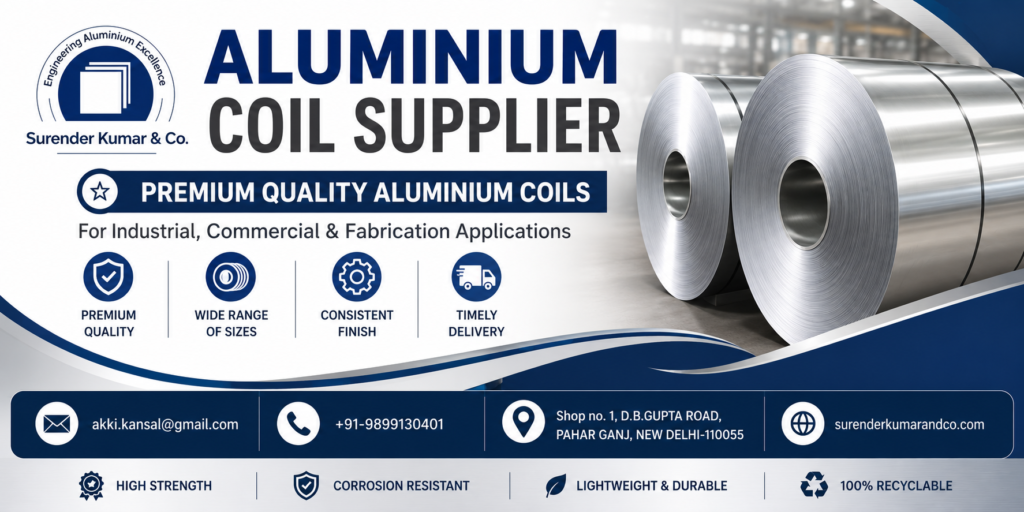
That’s exactly why choosing the right Aluminium Coil Supplier isn’t just a purchasing decision — it’s a business decision that affects your quality, your timelines, and ultimately, your reputation with your own customers. At Surender Kumar & Co., we’ve spent years supplying aluminium coils to industries that simply can’t afford to compromise, and in this guide, we’ll walk you through everything you need to know before you place your next order.
What Exactly Is an Aluminium Coil, and Why Does It Matter?
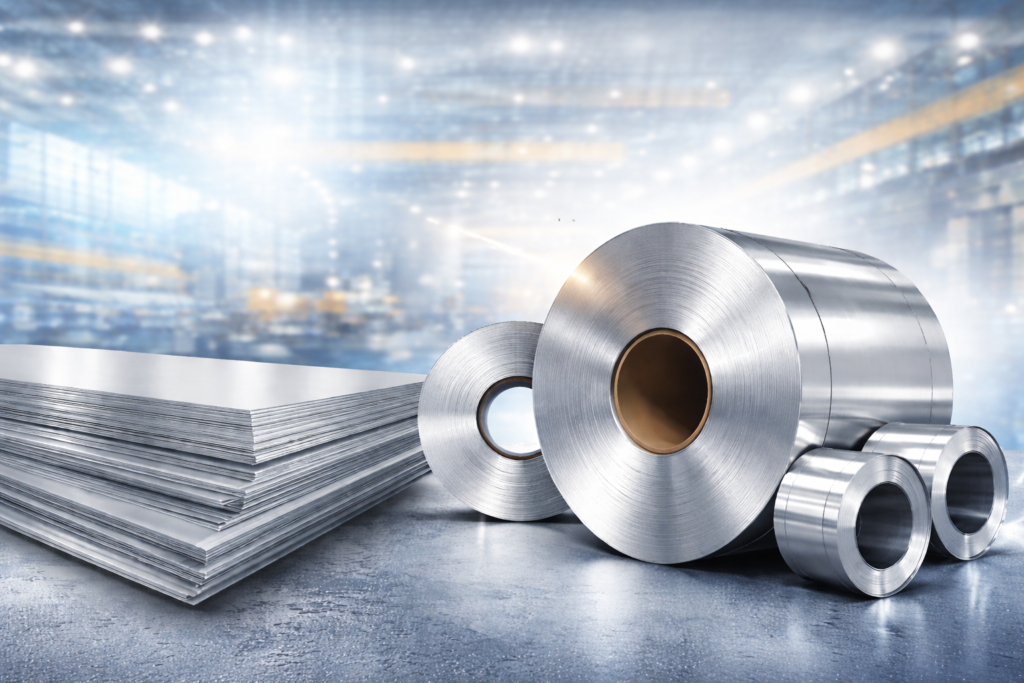
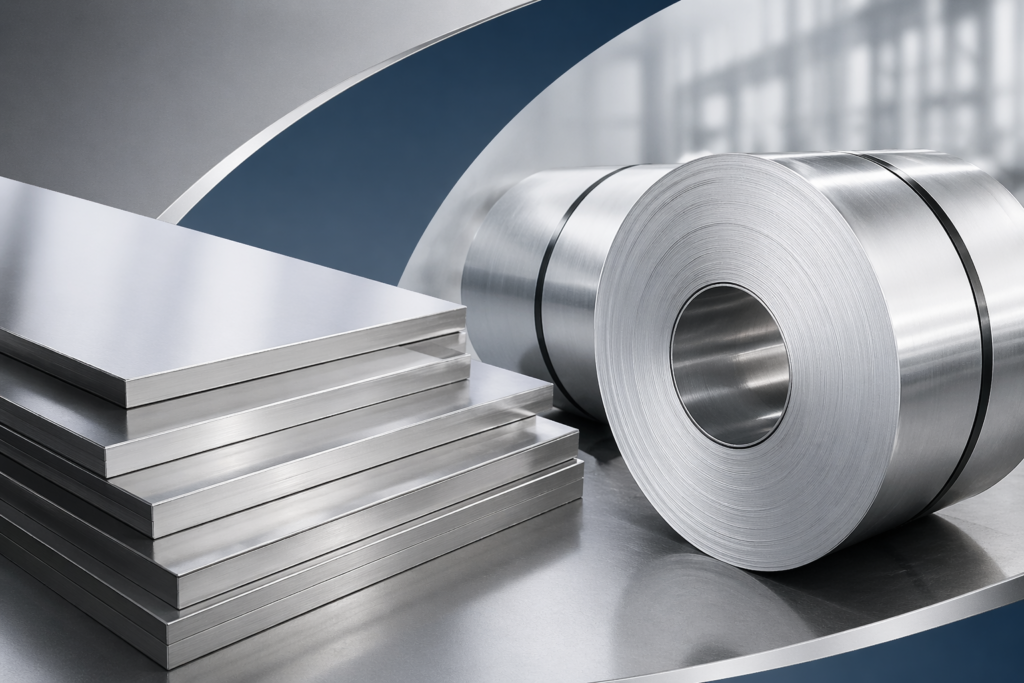
In simple terms, an aluminium coil is a long, continuous sheet of aluminium that has been rolled into a coil for easy storage, transport, and further processing. Think of it like a giant roll of metal “fabric” that manufacturers unroll, cut, bend, or stamp into the shapes they need — whether that’s roofing sheets, HVAC ducts, electrical enclosures, or automotive parts.
What makes aluminium so popular across industries is its unique combination of properties: it’s lightweight, naturally resistant to corrosion, an excellent conductor of heat and electricity, and remarkably easy to work with. Unlike steel, it doesn’t rust, which makes it ideal for outdoor and humid environments. And because it’s so light, it reduces transportation and handling costs significantly compared to heavier metals.
Common Industrial Applications of Aluminium Coils
Aluminium coils aren’t a one-size-fits-all product. Different industries use different grades, thicknesses, and finishes depending on their specific needs. Here’s a quick look at where these coils typically end up:
Industry Application Overview
| Industry | Common Use of Aluminium Coil | Preferred Thickness Range |
| Construction & Roofing | Roofing sheets, wall cladding, gutters | 0.4mm – 1.2mm |
| HVAC & Refrigeration | Ducting, fins, heat exchangers | 0.2mm – 0.8mm |
| Automotive | Body panels, radiators, trims | 0.5mm – 2mm |
| Packaging | Foil stock, container lids, caps | 0.1mm – 0.3mm |
| Electrical | Bus bars, transformer windings | 0.3mm – 1.5mm |
Note: Actual thickness requirements vary by project specification and grade selected. Always confirm with your supplier’s technical team.
Why the Right Supplier Makes All the Difference
Here’s something many first-time buyers don’t realize: aluminium coil is not a commodity where “any supplier will do.” Two coils that look identical on paper can behave very differently on the shop floor. One might crack during bending, oxidize prematurely, or vary in thickness across the roll — all because of inconsistent manufacturing or poor quality control somewhere in the supply chain.
A trusted supplier does more than just deliver metal. They act as a quality checkpoint, a technical advisor, and a reliability partner. This is where working with an established name like Surender Kumar & Co. genuinely pays off — because we understand that our customers’ production lines depend on consistency, not surprises.
Key Benefits of Choosing a Reliable Aluminium Coil Supplier
- Consistent quality: Every coil matches the promised grade, gauge, and tolerance — no unpleasant surprises mid-production.
- Timely delivery: Reliable suppliers understand that delays cascade down your entire supply chain.
- Technical guidance: Good suppliers help you choose the right alloy and temper for your specific application.
- Competitive, transparent pricing: No hidden costs or last-minute price hikes on confirmed orders.
- Bulk and custom order flexibility: Whether you need a small trial batch or a large industrial order, the supplier should scale with you.
- After-sales support: Genuine partners stand behind their material even after the delivery truck leaves.
Aluminium Coil Grades: A Quick Comparison
| Grade | Key Property | Best Suited For |
| 1100 | High corrosion resistance, softness | Chemical equipment, reflectors |
| 3003 | Good strength with formability | HVAC, general fabrication |
| 5052 | High strength, marine-grade corrosion resistance | Marine, automotive, appliances |
| 8011 | Excellent formability, food-safe | Packaging, foil, container lids |
Note: Grade selection should always be finalized with your supplier based on load, environment, and finishing requirements.
How to Choose the Right Aluminium Coil Supplier: Step-by-Step
If you’re new to sourcing aluminium coils, the process can feel overwhelming. Here’s a simple, practical roadmap to follow.
The Supplier Selection Process
| Step | What to Do | Why It Matters |
| 1. Define your needs | List thickness, alloy grade, quantity, and finish required | Prevents mismatched orders and rework |
| 2. Check credentials | Verify certifications, years in business, and client references | Builds confidence in quality and reliability |
| 3. Request a sample | Test the coil on a small run before committing to bulk | Confirms consistency before large investment |
| 4. Compare pricing structure | Ask for a transparent breakdown, not just a flat quote | Avoids hidden costs later in the order cycle |
| 5. Confirm logistics | Discuss delivery timelines, packaging, and transport handling | Protects your production schedule |
| 6. Establish a long-term relationship | Choose a supplier who can scale with recurring orders | Saves time and builds smoother future transactions |
Note: Skipping the sampling step is one of the most common — and costly — mistakes buyers make.
Tips and Best Practices When Sourcing Aluminium Coils
- Always ask for a mill test certificate (MTC): This document verifies the chemical composition and mechanical properties of the batch.
- Order slightly more than your calculated need: A small buffer (5–10%) helps absorb wastage during cutting and forming.
- Store coils properly: Keep them in a dry, covered area to prevent surface oxidation before use.
- Build a relationship, not just a transaction: Suppliers who know your business tend to prioritize you during high-demand periods.
- Ask about minimum order quantities (MOQ) upfront: This avoids awkward renegotiations later.
Common Mistakes Buyers Make (And How to Avoid Them)
Do’s and Don’ts of Buying Aluminium Coils
| Do | Don’t |
| Request material certification for every batch | Assume all coils from a supplier are identical without proof |
| Compare quotes based on total value, not just price per kg | Choose the cheapest quote without checking quality standards |
| Test a sample batch before bulk ordering | Place a large order without any trial run |
| Clarify delivery timelines in writing | Rely only on verbal promises for delivery dates |
| Store coils in a dry, ventilated space | Leave coils exposed to moisture or open weather |
Note: Most quality disputes in metal sourcing come down to skipping verification steps — not the supplier’s actual capability.
Why Businesses Trust Surender Kumar & Co.
We didn’t build our reputation overnight. It came from years of consistently supplying aluminium coils that meet the exact specifications our clients need — whether they’re running a small fabrication workshop or a large-scale industrial unit. Our approach is simple: understand what you’re building, recommend the right grade and gauge, and deliver material you can rely on, every single time.
We work closely with clients across construction, HVAC, packaging, and general fabrication industries, and we take pride in being the kind of supplier you don’t have to double-check every time a shipment arrives.
Frequently Asked Questions
1. What is the typical minimum order quantity (MOQ) for aluminium coils?
MOQs vary by supplier and coil specification, but many industrial suppliers, including Surender Kumar & Co., can accommodate both small trial orders and large bulk requirements. It’s best to discuss your specific volume directly with the supplier.
2. How do I know which aluminium grade is right for my project?
The right grade depends on your application’s exposure to weather, load requirements, and formability needs. A good supplier will ask about your end-use before recommending a grade rather than pushing a one-size-fits-all option.
3. How long does aluminium coil typically last in storage?
When stored properly in a dry, covered environment, aluminium coils can remain in good condition for extended periods, since aluminium naturally resists corrosion better than most metals.
4. Can aluminium coils be customized in terms of thickness and width?
Yes, most industrial suppliers offer customization in thickness, width, and finish based on your project’s specific requirements.
5. What documents should I ask for when purchasing aluminium coils?
Always request a mill test certificate (MTC) that confirms the chemical composition and mechanical properties of the batch, along with any relevant compliance or quality certifications.
6. Is it more cost-effective to buy in bulk?
Generally yes, bulk orders tend to bring down the per-unit cost, but it’s important to balance this against your storage capacity and actual project timeline to avoid overstocking.
Final Thoughts
Choosing an aluminium coil supplier isn’t something to rush through. The right partner does more than deliver metal to your doorstep — they help you avoid costly production delays, ensure consistent quality across every batch, and give you the technical confidence to plan your projects without second-guessing your material.
At Surender Kumar & Co., we’ve built our business around being that dependable partner for industries that simply can’t afford surprises. If you’re evaluating suppliers for your next project, we’d be glad to walk you through the right grade, gauge, and quantity for your specific needs — no pressure, just honest guidance from people who’ve been doing this for years.
Call: +91-9899130401
Email: akki.kansal@gmail.com
Address: 9012-9014, Shop no. 1, D.B.GUPTA ROAD, PAHAR GANJ, NEW DELHI-110055