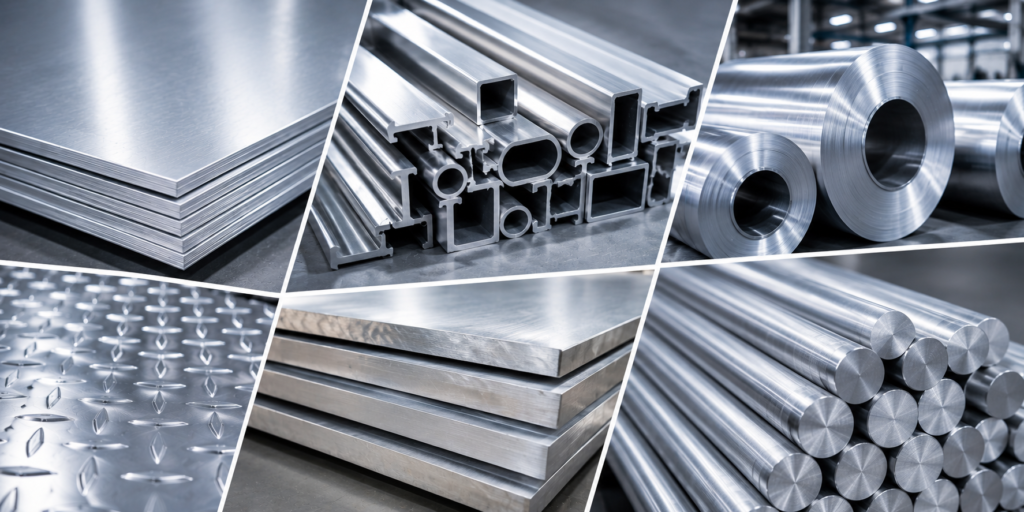
To choose the right Aluminium Material Supplier, evaluate these five factors: product range and material grades, supply consistency and lead times, quality certifications (BIS/ISO), pricing transparency, and technical support capability. For businesses in Delhi NCR, partnering with an established local aluminium dealer ensures faster delivery, reduced freight costs, and better after-sales service.
If your business depends on aluminium — whether for fabrication, construction, engineering, or manufacturing — your supplier isn’t just a vendor. They’re a critical link in your supply chain.
A wrong choice can mean delayed projects, substandard materials, unexpected price hikes, or worse — structural failures that damage your reputation.
With hundreds of options across Delhi NCR claiming to be the “best aluminium dealer,” how do you separate genuine partners from unreliable middlemen?
This guide gives you a practical, expert-backed framework to make the right decision — the first time.
Why Your Choice of Aluminium Supplier Matters More Than You Think
Aluminium is one of the most versatile industrial metals in use today. It’s lightweight, corrosion-resistant, thermally conductive, and infinitely recyclable. But not all aluminium is created equal — and neither are the suppliers who sell it.
The right aluminium material supplier ensures:
- Consistent alloy grades (6061, 6063, 7075, 5052, etc.) with traceable mill certificates
- On-time delivery that keeps your production schedule intact
- Competitive pricing with no hidden charges
- Technical guidance on which grade suits your specific application
- Reliable stock availability, even during peak demand periods
A supplier who fails on even two of these points can cost you more than the material itself — in delays, rework, and lost client trust.
Key Factors to Evaluate When Choosing an Aluminium Dealer in Delhi NCR
1. Product Range and Grade Availability
The first thing to assess is whether the supplier stocks the specific aluminium grades and profiles your business needs. Common industrial forms include:
- Flat bars, angle sections, and channels — for structural applications
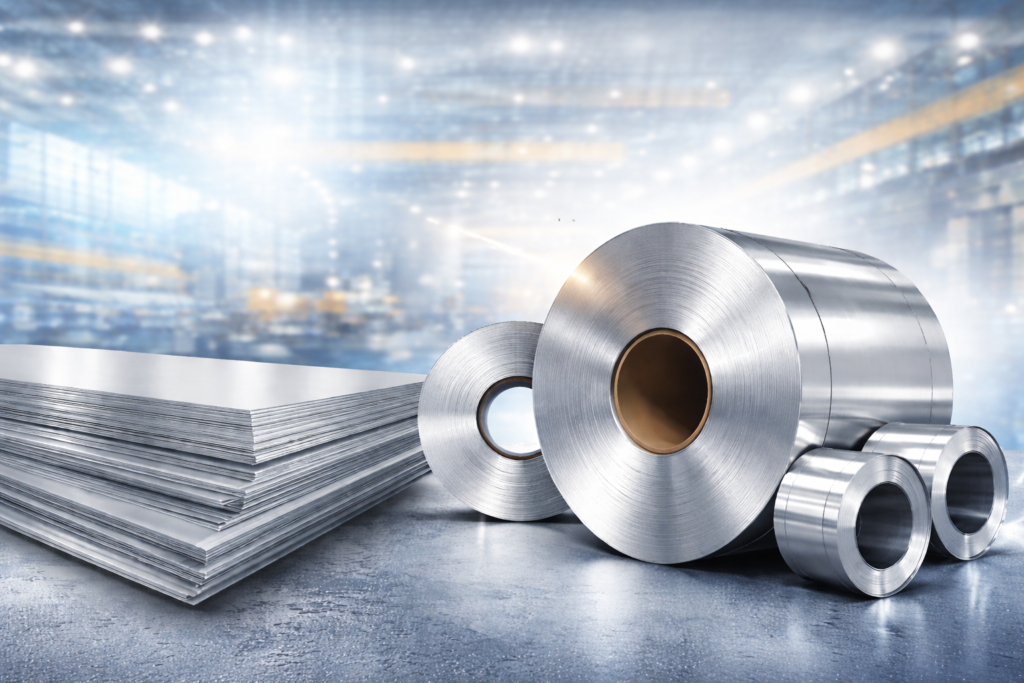
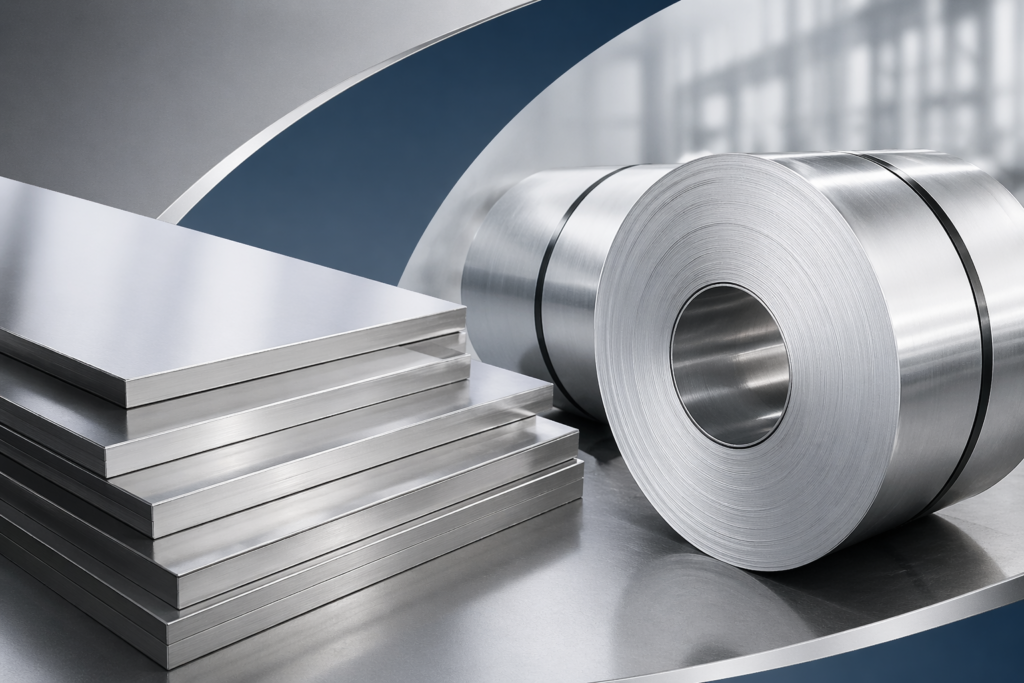
- Aluminium sheets and plates — for fabrication and cladding
- Extruded profiles and pipes — for architectural and engineering use
- Coils and strips — for manufacturing and automotive components
A reputable aluminium manufacturer in Delhi will stock multiple alloy series — 1xxx through 7xxx — and offer custom cutting or processing as needed. If a supplier only stocks one or two grades, they may not be equipped to grow with your business.
2. Quality Certifications and Material Traceability
Never compromise on quality documentation. Your supplier should provide:
- BIS (Bureau of Indian Standards) certification for relevant aluminium standards
- ISO 9001:2015 quality management certification
- Mill Test Reports (MTRs) or Material Test Certificates for each batch
- Compliance with international standards (ASTM, EN, or JIS) if your end clients require it
This is especially critical for industries like aerospace, defence, automotive, and high-rise construction, where material traceability is non-negotiable.
Expert Insight: Always ask for batch-level certificates before placing a large order. A genuine aluminium supplier will provide these without hesitation. If a dealer hesitates or provides generic certificates, that’s a red flag.
3. Pricing Transparency and Contract Terms
Aluminium prices are linked to the London Metal Exchange (LME) rates and fluctuate daily. A trustworthy dealer will:
- Offer clear, itemised quotations without hidden processing or delivery charges
- Explain how their prices are indexed to LME
- Provide volume-based discounts for regular or bulk orders
- Have clear payment terms, credit policies, and return/replacement clauses
Beware of suppliers who quote unusually low prices — they may be delivering substandard alloys or misrepresenting material grades.
4. Supply Consistency and Lead Times
For businesses running production lines or tight project timelines, delivery reliability is as important as price. Ask potential suppliers:
- What is their average lead time for standard and custom orders?
- Do they maintain buffer stock for high-demand grades?
- How do they handle supply disruptions or urgent requirements?
- Do they have a dedicated logistics team or rely on third parties?
An Aluminium Supplier in Delhi with strong warehousing infrastructure and local delivery capability will almost always outperform a distant supplier, even if the per-kg price is slightly lower.
5. Technical Expertise and After-Sales Support
This is where many businesses underestimate supplier value. Beyond just selling metal, a strong industrial aluminium materials supplier should offer:
- Guidance on alloy selection for your specific application (structural vs decorative vs high-strength)
- Advice on surface treatments — anodising, powder coating, or mill finish requirements
- Support with fabrication queries — tolerances, machinability, weldability
- Responsive customer service for complaints, rejections, or replacement needs
Technical support is particularly valuable for businesses new to aluminium or scaling into new product categories.
Red Flags to Watch Out For
Not every supplier who calls themselves an “aluminium manufacturer” is actually manufacturing or sourcing from verified mills. Watch for these warning signs:
| Red Flag | What It Signals |
| No material test certificates | Unverified alloy quality |
| Inconsistent pricing with no LME linkage | Opaque margins or grade substitution |
| No physical warehouse or office | Fly-by-night operation |
| Poor response time on inquiries | Likely poor after-sales support |
| No GST registration or formal invoicing | Non-compliant, risky vendor |
| Only cash transactions accepted | Unregulated sourcing |
How to Evaluate Suppliers Before Signing a Contract
Follow this practical checklist before committing to any aluminium dealer in Delhi NCR:
Step 1 — Request a Factory or Warehouse Visit Visit their facility to assess stock volume, storage conditions, and quality controls firsthand.
Step 2 — Ask for References Request contact details of at least 2–3 existing clients in a similar industry. A confident supplier will provide these readily.
Step 3 — Place a Trial Order Before committing to bulk quantities, place a small test order and evaluate delivery time, packaging quality, documentation accuracy, and material conformance.
Step 4 — Review Their Digital Presence A legitimate business will have a verifiable GST number, a professional website, and reviews on platforms like Google or Justdial.
Step 5 — Check for Long-Term Viability Ask how long they’ve been in business, their primary sourcing mills, and how they’ve managed supply during market disruptions.
Why Businesses in Delhi NCR Trust Surender Kumar & Co.
At Surender Kumar & Co., we’ve been a trusted name in industrial aluminium supply across Delhi and the NCR region for years. Here’s what sets us apart:
- Wide product range: Aluminium sheets, plates, angles, channels, flat bars, pipes, coils, and custom profiles
- Verified quality: We source from reputable manufacturers and provide complete material documentation with every order
- Competitive pricing: Transparent quotes linked to current market rates — no hidden charges
- Fast local delivery: Our warehousing and logistics are optimised for quick turnaround across Delhi NCR
- Expert guidance: Our team helps you select the right alloy and form for your specific application
Whether you’re a fabricator, contractor, OEM, or industrial buyer — we have the stock, the expertise, and the reliability your business deserves.
Frequently Asked Questions (FAQs)
Q1. What should I check before buying aluminium from a supplier in Delhi?
Before purchasing, verify that the supplier provides Material Test Certificates (MTRs), holds valid BIS or ISO certifications, is GST-registered, and can demonstrate consistent stock availability. Request a sample or trial order to evaluate quality firsthand.
Q2. What is the difference between an aluminium manufacturer and an aluminium dealer?
An aluminium manufacturer produces aluminium products directly from ingots or billets through extrusion, rolling, or casting. An aluminium dealer or distributor sources finished products from manufacturers and supplies them to end users. Some companies, like Surender Kumar & Co., function as authorised dealers with direct manufacturer relationships, offering manufacturer-level pricing and quality assurance.
Q3. Which aluminium grade is best for industrial and structural use?
For general industrial applications, 6061-T6 is the most widely used grade due to its excellent strength-to-weight ratio and machinability. For architectural extrusions, 6063 is preferred. High-strength applications in aerospace or defence use 7075. Your supplier should guide you on the right grade based on your load requirements, environment, and finishing needs.
Q4. How are aluminium prices determined in India?
Aluminium prices in India are primarily driven by London Metal Exchange (LME) spot rates, converted using the current USD-INR exchange rate. Premiums are added based on the product form (sheet, bar, extrusion), alloy grade, processing costs, and supplier margins. Prices change daily, so locking in a rate for bulk orders through a fixed-price contract is advisable.
Q5. Why should I choose a local aluminium supplier in Delhi NCR instead of a national distributor?
A local aluminium supplier offers faster delivery turnaround, lower freight costs, easier site visits, quicker dispute resolution, and more personalised service. For time-sensitive projects in Delhi NCR, local availability can mean the difference between a delivered project and a costly delay.
Conclusion
Choosing the right aluminium material supplier isn’t just about finding the lowest price per kilogram. It’s about building a reliable supply partnership that supports your quality standards, timelines, and business growth.
Evaluate suppliers on their grade range, documentation practices, delivery track record, pricing transparency, and technical capability. Visit their facility, ask the hard questions, and always start with a trial order before committing to long-term volumes.
The right partner won’t just sell you metal — they’ll help your business perform better.
Ready to Partner with a Trusted Aluminium Supplier in Delhi?
Surender Kumar & Co. is your reliable source for industrial aluminium materials across Delhi and the NCR region.
Call us today to discuss your requirements and get a customised quotation.
Visit us at our warehouse to inspect our stock firsthand.
Contact us for bulk pricing, technical consultation, or urgent delivery needs.
Don’t compromise on your materials — partner with experts who understand your business.